What "retail-ready" really means
A retail-ready pack is one a shopper can pick up, read and trust within a few seconds, and that a store can put straight on a shelf without repacking it. It carries the brand, the flavour, the weight and the claims a buyer needs, and it protects the snack inside until it is opened at home.
For a vacuum fried snack the bar is higher. The pieces are light, fragile and oil-sensitive: they crush easily, they go soft in damp air, and surface oil can stain the pack and turn stale. A pack that works for a hard biscuit can fail a vacuum fried chip, so packaging decisions belong in the product plan from the start.
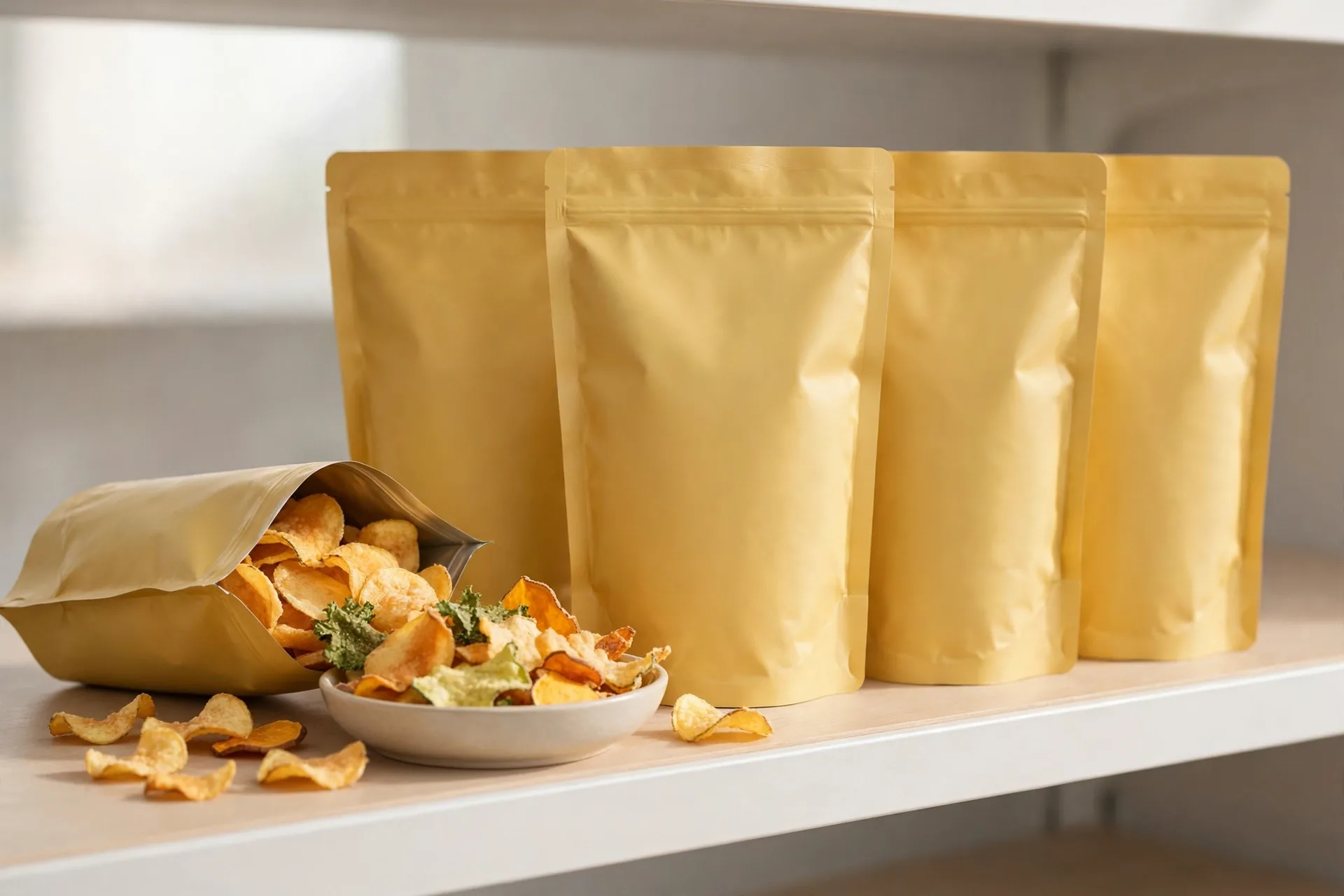
Pouch formats: stand-up, flat and pillow
Most retail vacuum fried snacks sell in one of three pouch formats, each with a different shelf presence and fit for fragile pieces — so choose the format against your channel before you choose the artwork.
Stand-up pouch
The stand-up pouch has a folded base that lets it stand on a shelf, and a wide flat face for branding. It is the most common choice for premium vacuum fried snacks in supermarkets and health-food stores, and its flat bottom gives fragile pieces a wider base to rest on. The trade-off is more film than a flat pouch, and a filling line that can hold it upright.
Flat pouch
The flat pouch, sealed on three sides, is the simplest and most economical format. It lays flat in a box and stacks neatly, which suits e-commerce and multipacks, but on a shelf it has no standing face, so it is usually hung from a peg or laid in a tray. For delicate, thin slices it protects less than a stand-up pouch, because the pieces sit in a thinner layer.
Pillow bag
The pillow bag is the familiar chip-bag shape, sealed at the top, bottom and down the back. It runs fast on high-speed lines and suits larger volumes, but it takes up more shelf depth and gives fragile pieces less support. It fits a value line sold in volume; it is a poor fit for a premium product whose selling point is whole, unbroken slices.
Barrier and seal quality
Two qualities decide whether a pack protects the snack: the barrier of the film and the quality of the seal. Neither can be judged from outside a finished pack, so check both before you commit to a supplier.
What a barrier does
The film is the wall between your snack and the air outside. A good barrier film slows oxygen and moisture moving through the pack wall: oxygen turns surface oil stale and dulls flavour, and moisture softens the crisp texture. Ask your packaging supplier what barrier properties the film is made for, and test the finished pack with your own product rather than trusting a data sheet alone.
What a good seal looks like
The seal is the joint where the film is welded shut, and it is where most pack failures happen. A good seal is even across its full width, with no channels, wrinkles or unsealed gaps. Check seals by eye on every run, and pull-test a few packs from each batch: a seal that peels apart easily will leak air and spoil the snack. Pay special attention to seals that cross a fold or a gusset, where the film is thickest.
Nitrogen flushing, in plain terms
Nitrogen flushing means replacing the air inside the pack with nitrogen before it is sealed. Air carries oxygen, and oxygen turns surface oil stale and dulls flavour over time. Nitrogen does nothing to the snack itself; it simply takes oxygen's place.
For an oil-bearing snack, flushing is worth discussing with your packaging supplier, especially if the product will sit on a warm shelf or travel far. It is not a substitute for a good barrier film or a sound seal, and it adds a step to the packing line. Ask your supplier how the flush is controlled and how you can check it happened.
Pack sizes and shelf presentation
Pack size is a channel decision before it is a design decision. A single-serve pack suits convenience stores and trial purchases; a larger sharing pack suits supermarkets and family shopping. Offer the size your channel actually sells, and keep the range narrow at launch.
Shelf presentation matters as much as the pack itself. A stand-up pouch needs a flat shelf and enough height to stand clear of the shelf above; a flat pouch needs a peg or a tray, or it will slide and disappear. Talk to your buyer about how the product will be displayed before you finalise the format, and ship in shelf-ready trays when the retailer asks.
Labels and claims: what to check
The label is where a retail brand earns trust or loses it, and the rules are not the same everywhere. Check the labelling rules of your target market before you print anything: what must appear on the pack, how ingredients and allergens are declared, and how net weight and dates must be shown. A pack printed for one country may not be legal in another.
Claims need the same care. A low-oil claim is the most valuable claim a vacuum fried snack can carry — buyers of low-oil snacks commonly ask for finished oil content below 18% — but only put it on the pack after you have verified it on your own product, and only in the form your target market allows.
Keep the front of the pack honest and simple: the product name, the flavour, and one clear claim. The back can carry the detail — ingredients, nutrition, storage advice and your contact details.
How pack choice links back to oil content and crispness
Packaging protects crispness; it cannot create it. A vacuum fried snack leaves the fryer crisp because the water has been driven out under vacuum at 80–100°C, and the centrifugal spin inside the chamber has thrown the surface oil off before the pieces cool. Skip that step, and no film or gas flush will keep the pieces crisp.
Surface oil is also the pack's enemy. It stains the inside of the film, soaks into paper labels and turns stale in contact with oxygen, which is why a low-oil product packs better as well as eats better. Buyers who ask for finished oil content below 18% want a snack that is still crisp when the pack is opened — so verify the figure on your own product before you quote it, and treat the fryer, not the pouch, as the place where oil content is decided.
Cool the pieces fully before packing. Warm pieces release moisture inside a sealed pack, and that moisture softens the crunch the customer paid for. Pack in a dry room, keep finished packs out of damp storage, and check the first packs of each run by hand before the line speeds up.
Choosing a vacuum fryer for a retail brand
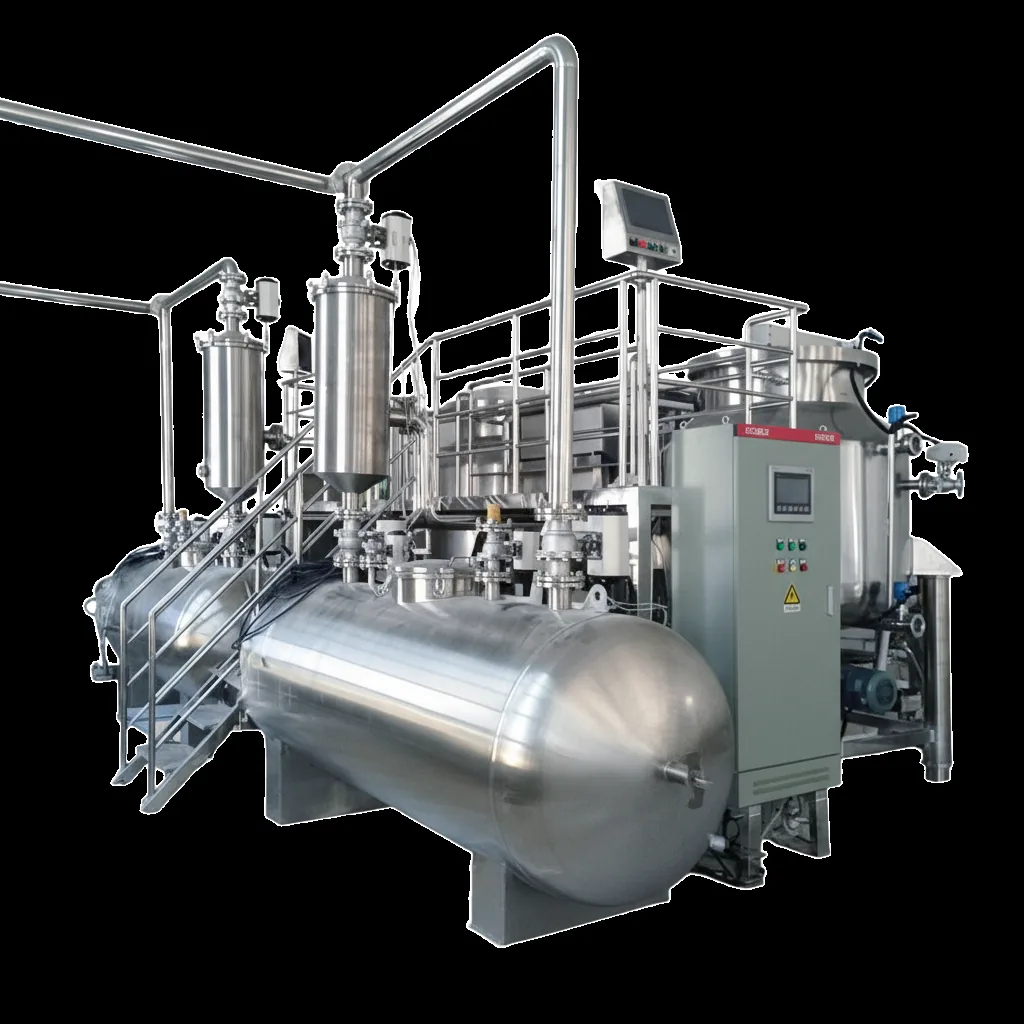
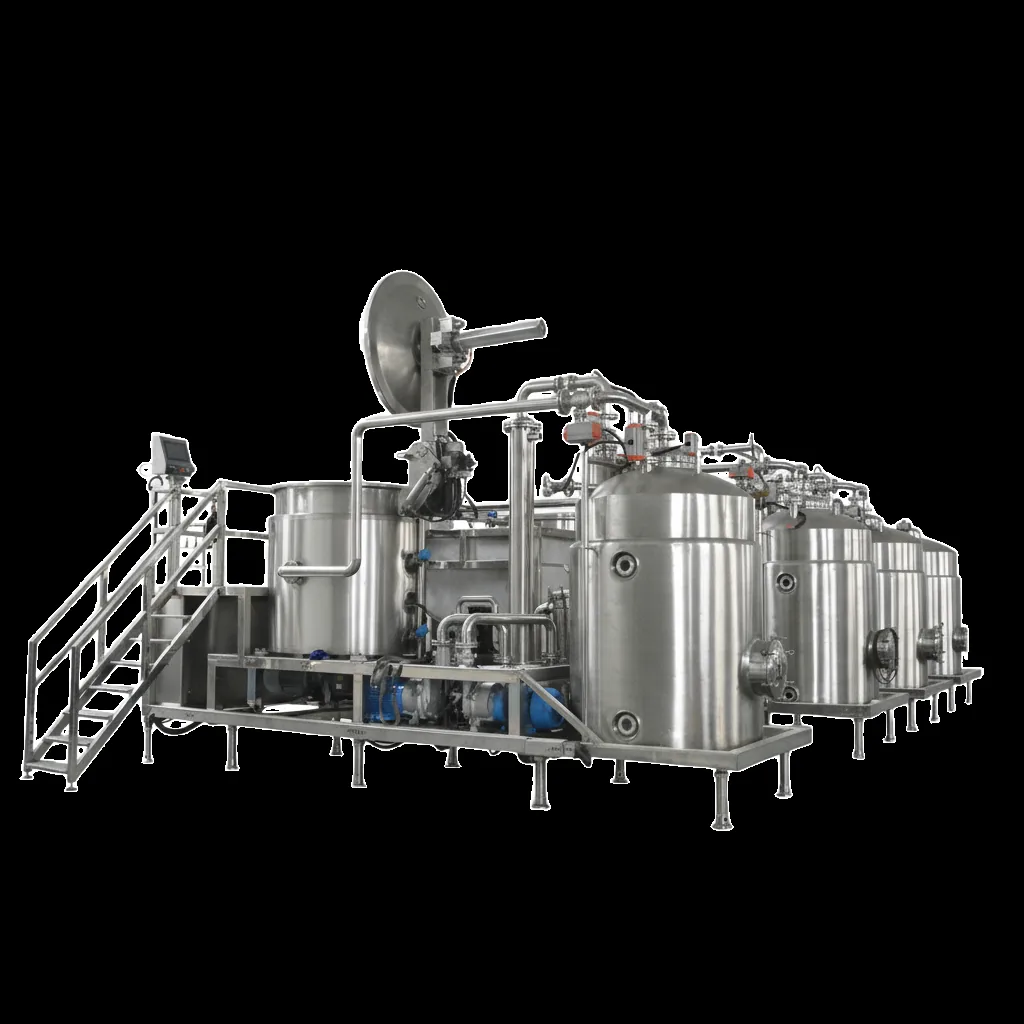
Packaging is the buyer's step — we supply the fryer, not the packing line — but the fryer decides how packable the snack is. A machine with a built-in centrifuge gives you dry, even pieces that pack cleanly; a machine without one gives you oily pieces that stain the pack and go stale faster. When you compare fryers, check the de-oiling step first.
QS vacuum fryers use a Delta PLC with a MCGS touchscreen, so frying and spinning repeat from batch to batch. The construction is 304 stainless steel. Before you buy, run a trial batch of your own product — colour, crunch, surface oil and breakage are all visible in one basket.
QS vacuum fryer models
| Model | Batch capacity |
|---|---|
| QS-VF100 | 100KG/batch |
| QS-VF150 | 150KG/batch |
| QS-300 | 300KG/batch |
- QS-300 vessel: 2600mm (H) x 1600mm (D).
- Frying temperature: 80–100°C under vacuum.
- De-oiling: centrifugal, inside the chamber.
- Control: Delta PLC with MCGS touchscreen.
- Construction: 304 stainless steel.
- Warranty: 1-year warranty; lead time approx. 3 months.
Common packing mistakes to avoid
Most packing problems come from the same few oversights.
- Packing pieces before they have fully cooled, trapping moisture in the pack.
- Choosing a pouch for its looks without checking it fits the shelf or the filling line.
- Accepting seals without checking them, and finding the leak after the packs have shipped.
- Printing claims, including a low-oil claim, before verifying them on your own product.
- Using one pack design for every market without checking each target market's labelling rules.
- Letting the snack sit unpacked in a damp room while the packing line waits.
- Treating the pack as a fix for an oily batch — oil content is decided in the fryer.
Frequently asked questions
What pouch format is best for vacuum fried snacks?
For most retail brands, a stand-up pouch is the safest starting point: it stands on the shelf and supports fragile pieces better than a flat pouch. A flat pouch suits e-commerce and multipacks, and a pillow bag suits high-volume value lines. Choose against your channel and piece shape, and test it with your own product first.
Does nitrogen flushing help vacuum fried snacks?
Yes, in principle. Flushing replaces the air in the pack with nitrogen, so less oxygen is left inside to turn surface oil stale. It is worth discussing with your packaging supplier if the product will sit on a warm shelf or travel far — but it is not a substitute for a good barrier film and a sound seal.
Can I put a low-oil claim on the pack?
Only after you have verified it on your own product. Buyers of low-oil snacks commonly ask for finished oil content below 18%, so test your snack, keep the result on file, and use the claim only in the form your target market's labelling rules allow.
What is the most common packing mistake?
Packing pieces before they have fully cooled. Warm pieces release moisture inside a sealed pack and soften the crunch the customer paid for. Cool the batch completely, pack in a dry room, and check the first packs of each run by hand.
Talk to us about your vacuum frying line
Tell us your product and target output — we will help you size the fryer. Explore the range on our vacuum fryer page.
Specifications are for reference only and are subject to the final supplied equipment.