
Actual power draw ~60% of installed power
Supreme Beast — Industrial Food Machinery
Industrial Freeze Dryers & Vacuum Fryers for Food Processing
Explore freeze dryers in 20 m² / 200 kg, 100 m² / 1 tonne and 200 m² / 2 tonnes of fresh material per batch, plus vacuum fryers rated at 100, 150 and 300 kg of raw material per batch. Tell us your food product and project requirements to discuss the right equipment and line configuration.
Batch loading and finished yield depend on the product and agreed process.
Inside the factory
See the production floor
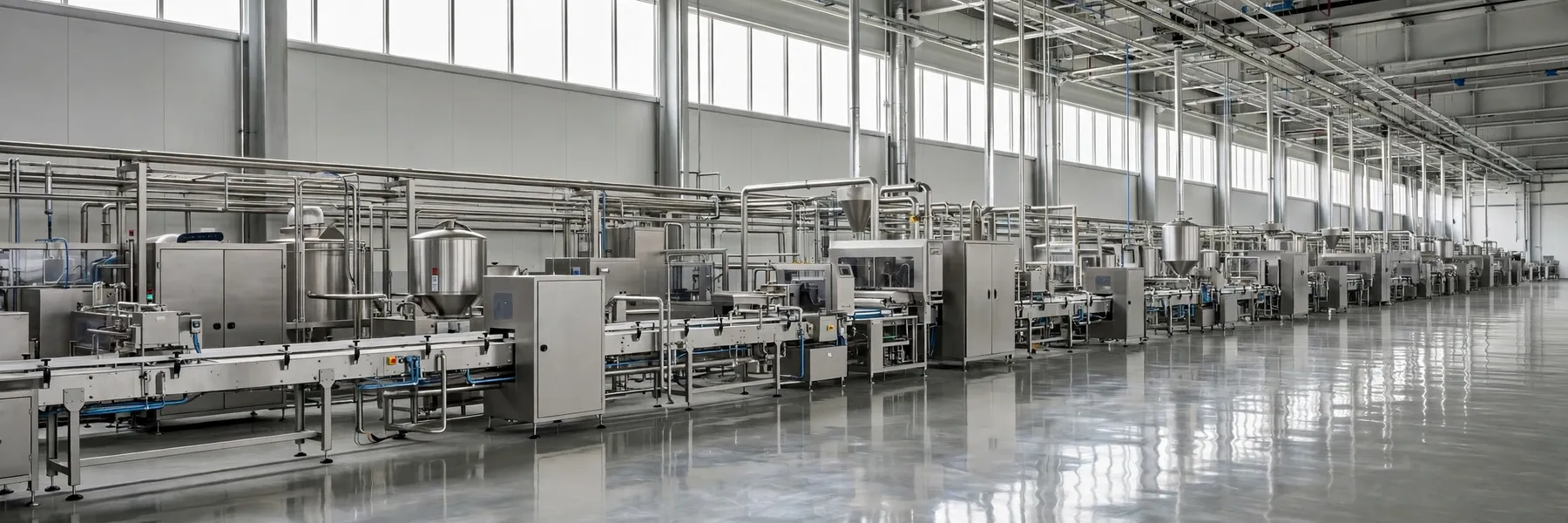
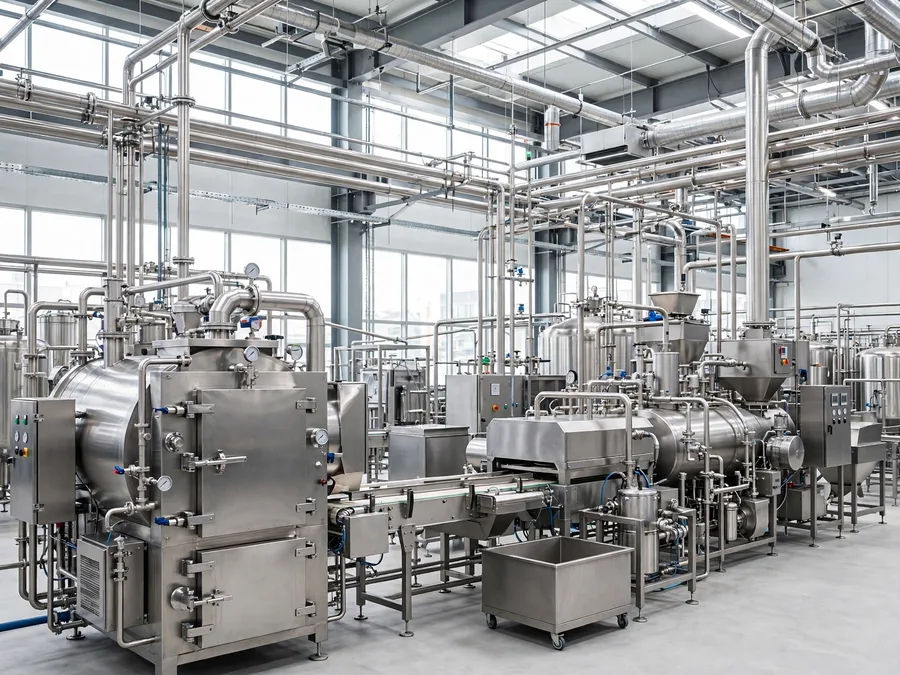
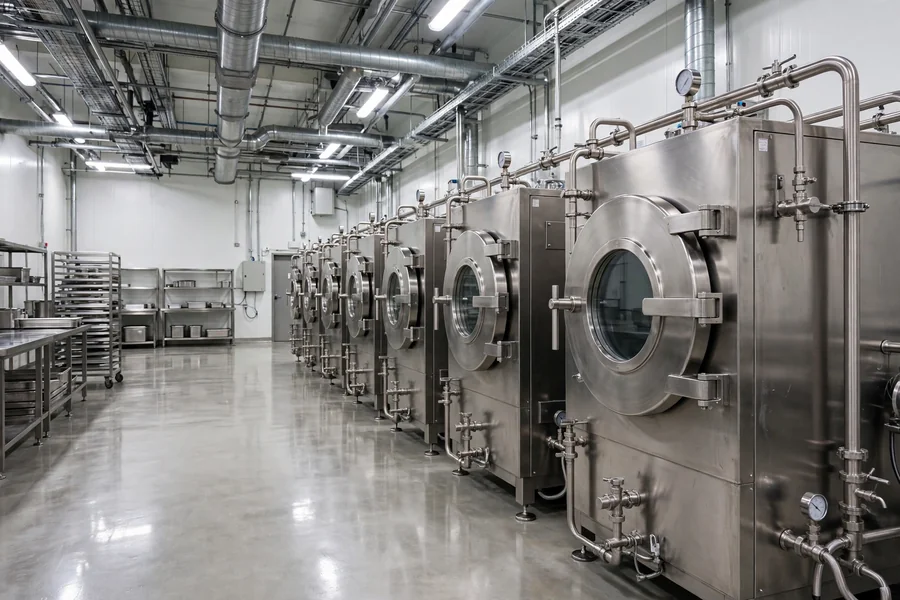
A food processing plant runs on space, hygiene and flow. The panorama below shows the kind of hall our machines are built for — stainless steel lines, clear walkways and room to work. The image is an illustration of a modern food processing hall, not a photograph of our own workshop.
Two core machines — one complete line
Start with the machine. Finish with the line.
Every project starts from your food product. Choose the core process first, then add preparation, handling and packing around it.
Freeze Dryers
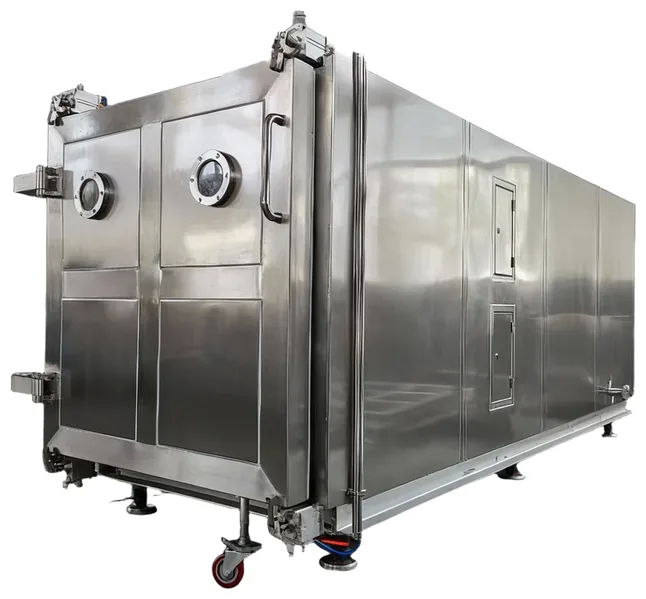
20 / 100 / 200 m² commercial sizes — 200 kg, 1 tonne and 2 tonnes of fresh material per batch. SUS304 chamber, −60°C refrigeration, four heating control channels at ±0.1°C.
- 20 m² / 200 kg per batch
- 100 m² / 1 t per batch
- 200 m² / 2 t per batch
- CE & ISO certified
Vacuum Fryers
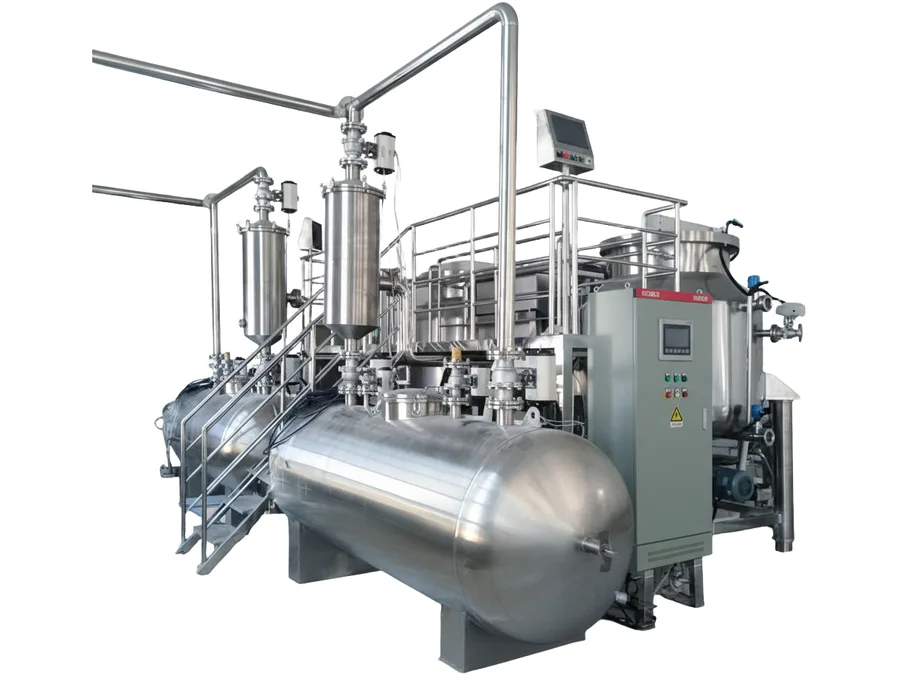
Low-temperature vacuum frying at 80–100°C for fruit and vegetable snacks. Oil content < 18%. Steam coil heating, vacuum frying and in-chamber de-oiling.
- 100 kg raw material / batch
- 150 kg raw material / batch
- 300 kg raw material / batch
- Oil content < 18%
Complete Lines
From preparation to packing: sorting, washing, cutting, the core dryer or fryer, handling, inspection and packing — configured for your food, capacity and factory.
- Freeze-dried food lines
- Vacuum-fried snack lines
- Shared pre-processing
- Project quotation
Choose your food application
What food will you process?
Different foods need different routes. Start from the finished product you want, and we will work back to the right process and batch size.
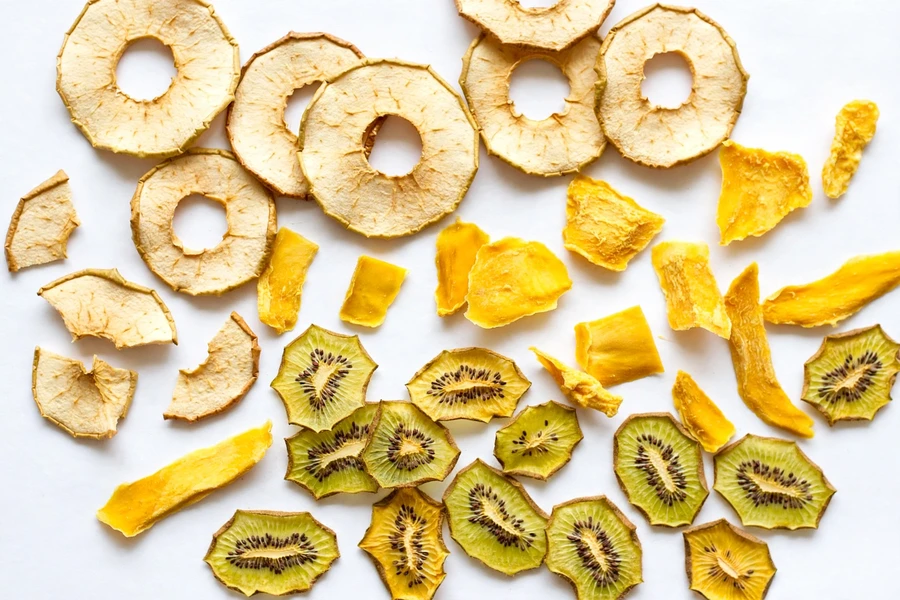
Fruit & Vegetable Snacks
Freeze-dried slices and vacuum-fried crisps from mango, durian, pineapple, apple, sweet potato, banana and more. Crisp texture, low oil, long shelf life.
Fruit snack solutions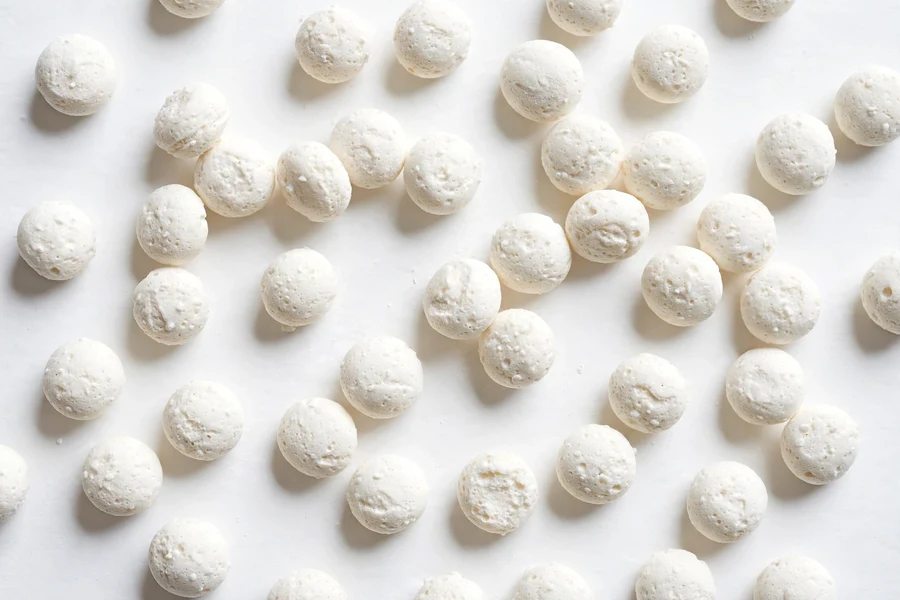
Yogurt Bites & Formed Foods
Freeze-dried yogurt bites and formed snack pieces. Shape, size and recipe stay yours — we size the dryer and the line around them.
Formed food solutions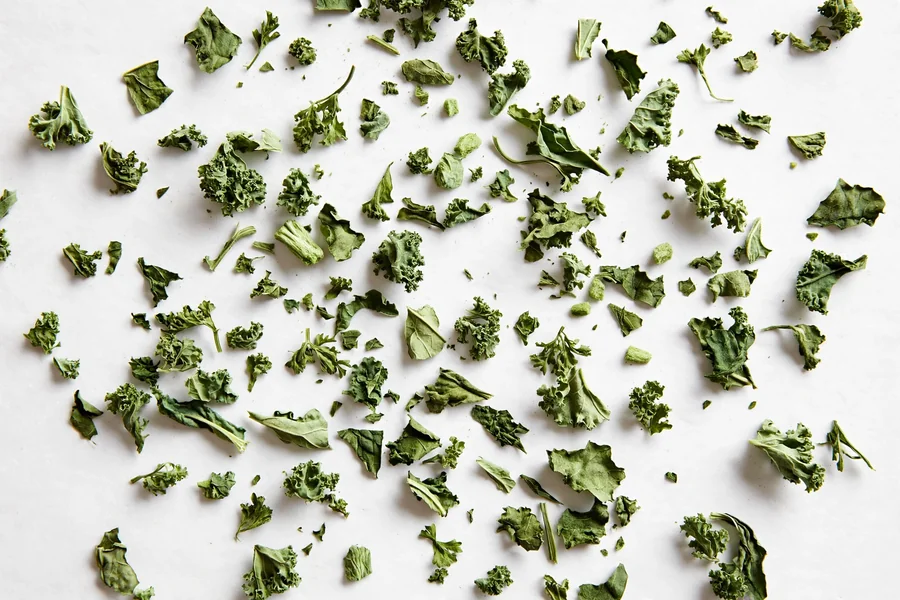
Food Ingredients
Freeze-dried powders, pieces and flavour ingredients — osmanthus, citrus peel, herbs, vegetables and more — for food manufacturers and ingredient buyers.
Ingredient solutionsTwo process routes
Freeze drying or vacuum frying?
They are different routes to different products. Freeze drying removes water from a frozen product under vacuum. Vacuum frying uses heated oil under reduced pressure and includes de-oiling. Compare representative samples before deciding.
Freeze drying
Best for light, crisp, rehydratable products: fruit slices, yogurt bites, powders and ingredients. No oil. Shape and colour stay close to the fresh product.
Explore freeze dryersVacuum frying
Best for savoury crisps with a fried bite: vegetable and fruit chips at 80–100°C, oil content < 18%, with in-chamber centrifugal de-oiling.
Explore vacuum fryersEngineered for efficiency
Energy use you can plan around
Installed power is not the same as power used. Our freeze dryers are listed with their total installed power — and the figure that matters for your electricity bill is the actual draw during a batch.
Approximately 60% of installed power
During a batch, the freeze dryer draws approximately 60% of its listed total power on average, because the refrigeration compressor adjusts output and shuts down as the material dries. The exact figure depends on the food, the loading and the cycle.
−60°C two-stage refrigeration
A two-stage compression system with a large pure-copper cold trap. The compressor output follows the drying progress instead of running at full load for the whole batch.
Four channels at ±0.1°C
Four independent heating control channels with PT100 sensors keep shelf temperature within ±0.1°C, so heat is applied where it is needed and not wasted on already-dry zones.
Want a number for your own project? Use the energy cost estimator below — it runs on the figures above and your local utility rates.
Finished food showcase
What comes out of the machines
Sample formats from our showcase. A photograph shows the form — moisture, oil content and shelf life are confirmed by product-specific testing, not by a picture.
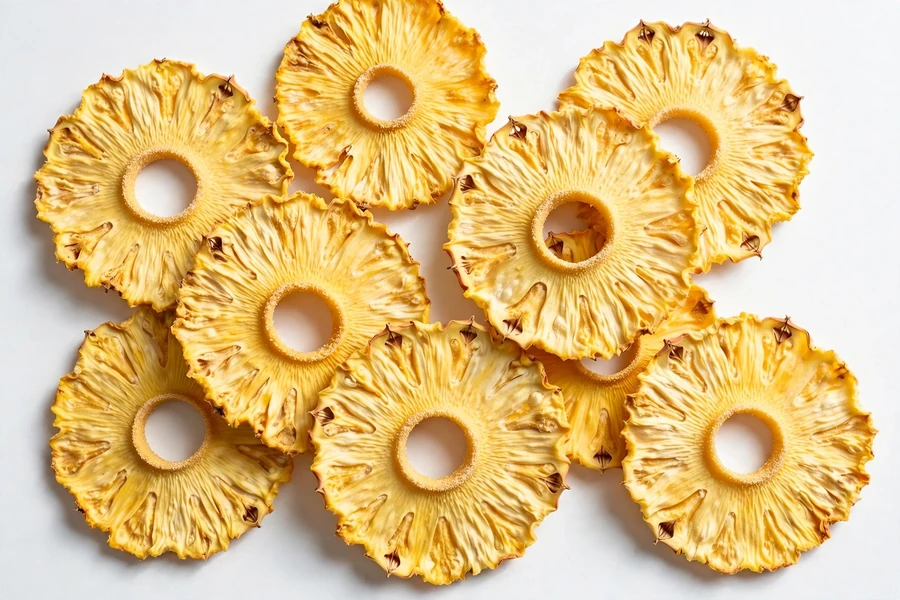
Freeze-dried Pineapple Slices
Light, crisp slices. Freeze-dried from fresh fruit.
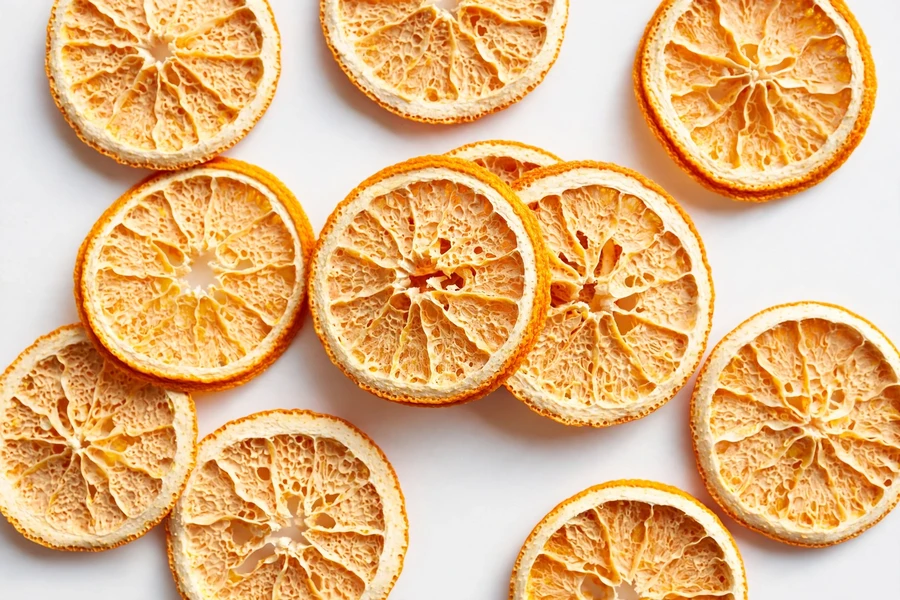
Freeze-dried Orange Slices
Whole-slice format for snacks and ingredients.
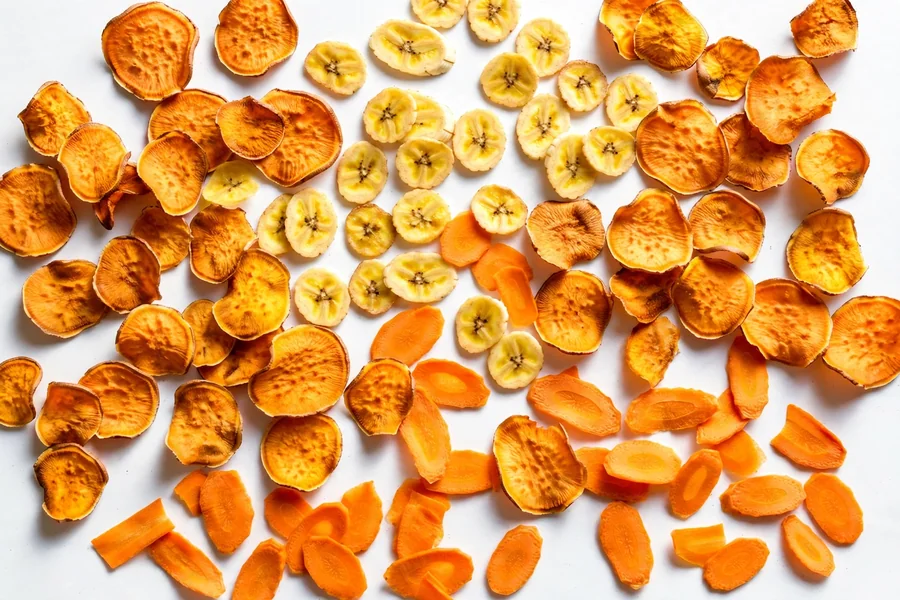
Vacuum-fried Snacks
Crisp vegetable and fruit chips, oil content < 18%.
Free sample evaluation
Tell us which food you would like to test. We source it locally, process a sample in our factory and send it to you — you only cover the shipping. No commitment: see the result first, then decide.
Request a sample evaluationEnergy cost estimator
Estimate your annual energy cost
Enter your local rates and operating schedule. The estimator uses the listed rated power and the verified actual draw of approximately 60% for freeze dryers, plus listed steam consumption for vacuum fryers. Change any number — the result updates when you calculate.
Freeze dryer electricity is estimated at approximately 60% of rated power — the actual draw stated in the equipment specification. The comparison figure is the same machine running at 100% of rated power for the same schedule. Vacuum fryer steam cost uses the listed steam consumption; where a figure is not listed, that cost is marked “to be confirmed by engineering” and left out of the total.
Manufacturing capability
Built in our own factory
Our workshop in Shanghai builds the freeze dryers and vacuum fryers we sell. Key assembly, inspection and testing happen in-house, and every project starts with a sample evaluation on real equipment.
- SUS304 food-contact construction
- CE & ISO certified equipment
- Factory acceptance testing before shipment
- Installation, commissioning and training
How a project works
From your food to a working line
Share your product
Food, form, batch quantity and target finished product.
Confirm the process
Freeze drying, vacuum frying, or a complete line — agreed on evidence.
Review the equipment scope
Machine, utilities, handling and packing — supplier, optional and buyer-provided items listed separately.
Agree on acceptance criteria
Measurable targets for moisture, oil content, texture and output.
Plan installation and training
Site preparation, commissioning and operator training.
Manufacture and deliver
Production, factory acceptance testing, shipment and handover.
Common questions
Before you ask for a quote
What freeze dryer sizes do you offer?
The three commercial sizes are 20 m² / 200 kg, 100 m² / 1 tonne and 200 m² / 2 tonnes of fresh material per batch. These are batch figures, not daily output figures. Tell us your food and the mass basis you use so that loading and finished yield can be reviewed.
What are the vacuum fryer capacities?
The range covers 100, 150 and 300 kg of raw material per batch. The supplied specifications use sweet potato as the reference material. Loading and finished output for other foods need to be evaluated using their dimensions, density and processing requirements.
Does batch capacity mean finished product weight?
Not automatically. The vacuum fryer specifications identify raw-material loading and list separate example yields. For a freeze dryer project, confirm whether your requested quantity refers to fresh food, prepared material or finished product before comparing it with the commercial batch rating.
How long does a freeze-drying batch take?
A reliable cycle needs a defined food, cut size, loading depth, starting condition and final-product target. There is no validated universal cycle time. Request a product-specific assessment before planning daily production or unit operating cost.
Can I request a sample evaluation?
Yes. Submit a sample-evaluation request with your food, preparation details and target product. We source the food locally, process a sample in our factory and send it to you — you only cover the shipping. A small sample assessment is different from full-load production validation.
Ready to discuss your project?
Send five details: food product, raw or finished mass basis, quantity per batch, destination and project stage. An engineer will reply with a process proposal, equipment list and quotation.
Request a Project Proposal Chat on WhatsApp