Why tropical fruit suits freeze drying
Tropical fruit is mostly water, and that is exactly what freeze drying removes. The fruit is frozen first, then the water leaves as vapour under vacuum, without the fruit ever getting hot. Never cooked, the pieces keep their shape, and their colour and flavour survive far better than in heat drying.
That gentle treatment is what makes tropical fruit a natural freeze drying candidate. Mango, pineapple and the other fruits in this guide are soft, sweet and strongly coloured — the qualities buyers pay for, and the qualities heat drying takes away. A freeze-dried mango piece still looks and tastes like mango, with the light, crisp bite that makes it a snack.
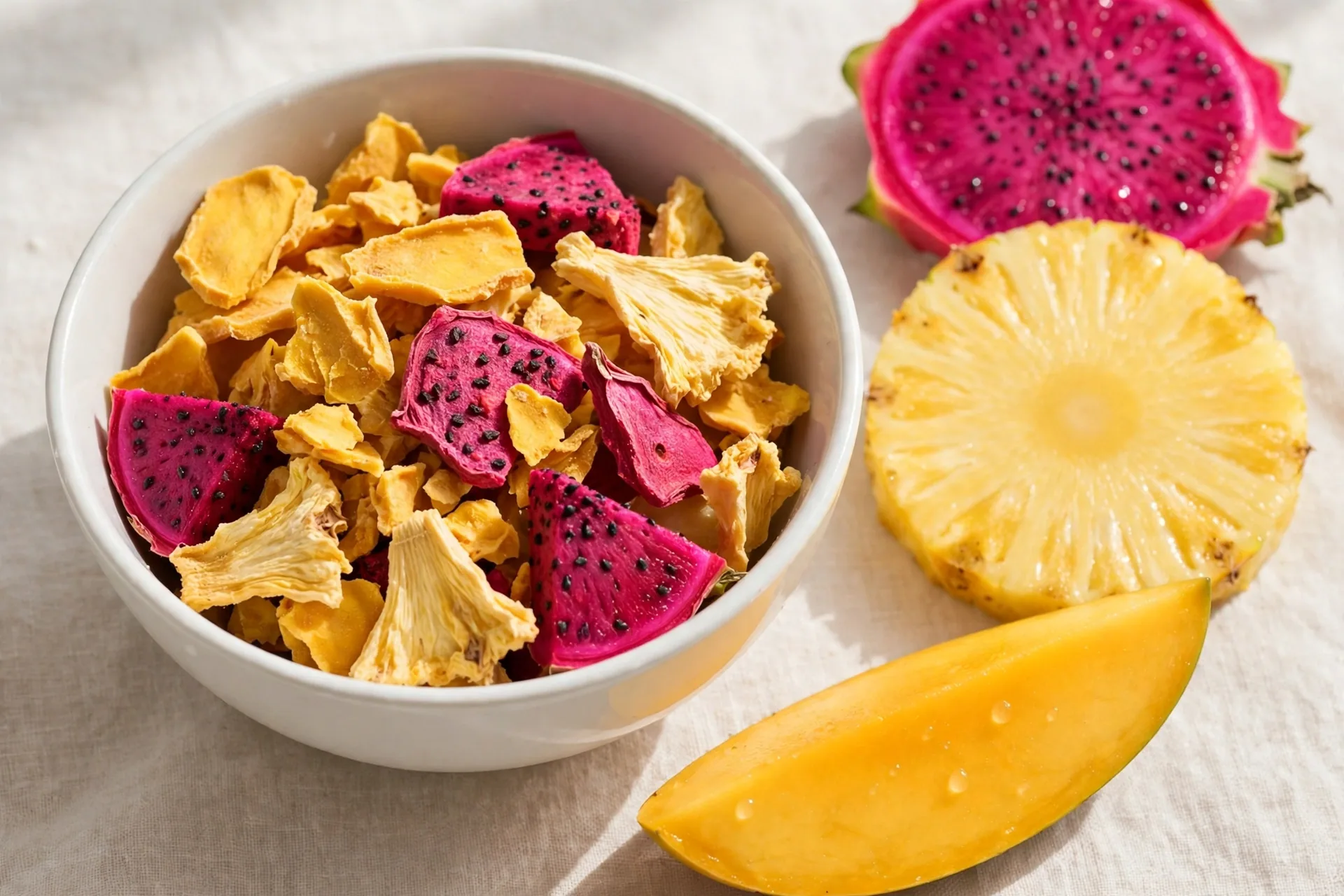
Six tropical fruits, one process
The same freeze dryer handles all six fruits below, but each has its own character.
Mango
Mango is the flagship freeze-dried tropical fruit: sweet, aromatic and deeply coloured, drying into firm, bright pieces that hold their shape. It works as a snack, a cereal topping and a baking ingredient. Peel, remove the stone, and slice evenly.
Pineapple
Pineapple dries into crisp, tart-sweet rings or chunks with a strong aroma. Its fibrous flesh holds up well, and the finished pieces are firm rather than fragile. Peel, core, and cut to one even size, trimming away any woody core.
Banana
Banana is one of the easiest tropical fruits to freeze dry. Sliced banana dries into light, crisp rounds with a mild, sweet flavour, and it powders well for smoothies and baking. Peel and slice evenly; very ripe bananas dry darker and softer.
Dragon fruit
Dragon fruit earns its place on looks alone. White flesh with black seeds, or deep pink flesh in the red variety, dries into striking pieces that stand out in a mixed pack. The flavour is mild, so it sells best in a mix, where mango or pineapple carries the flavour.
Papaya
Papaya dries into soft, sweet pieces with a warm orange colour. It is less firm than mango or pineapple when dried, so it suits mixes and toppings more than a standalone crisp snack. Peel, remove the seeds, and cut into even chunks.
Jackfruit
Jackfruit is the chewiest of the six, with a sweet, distinctive flavour. The fleshy pods dry into firm, golden pieces that hold their shape. Remove the seeds and fibrous strands, and keep the pods in even pieces.
Preparing the fruit: peeling, slicing and piece size
Preparation decides more of the result than the dryer settings do. Fruit that goes in uneven comes out uneven.
Peel fully and remove anything that is not flesh: stones, seeds, cores, woody centres and fibrous strands. What stays on the tray ends up in the pack, so a piece of core or peel is a complaint waiting to happen. Wash the fruit before peeling.
Slice to one even size per batch. Pieces of different sizes dry at different rates: small ones finish early and turn brittle, while large ones stay damp in the middle. Cut to the size that suits the use — larger for snacks, smaller for toppings — and keep the cut consistent.
Load the trays in a single layer, with space between the pieces so air and vapour can move around each one. Pieces that touch or overlap dry unevenly and stick together. Do not overload: a tray packed too full slows the whole batch down.
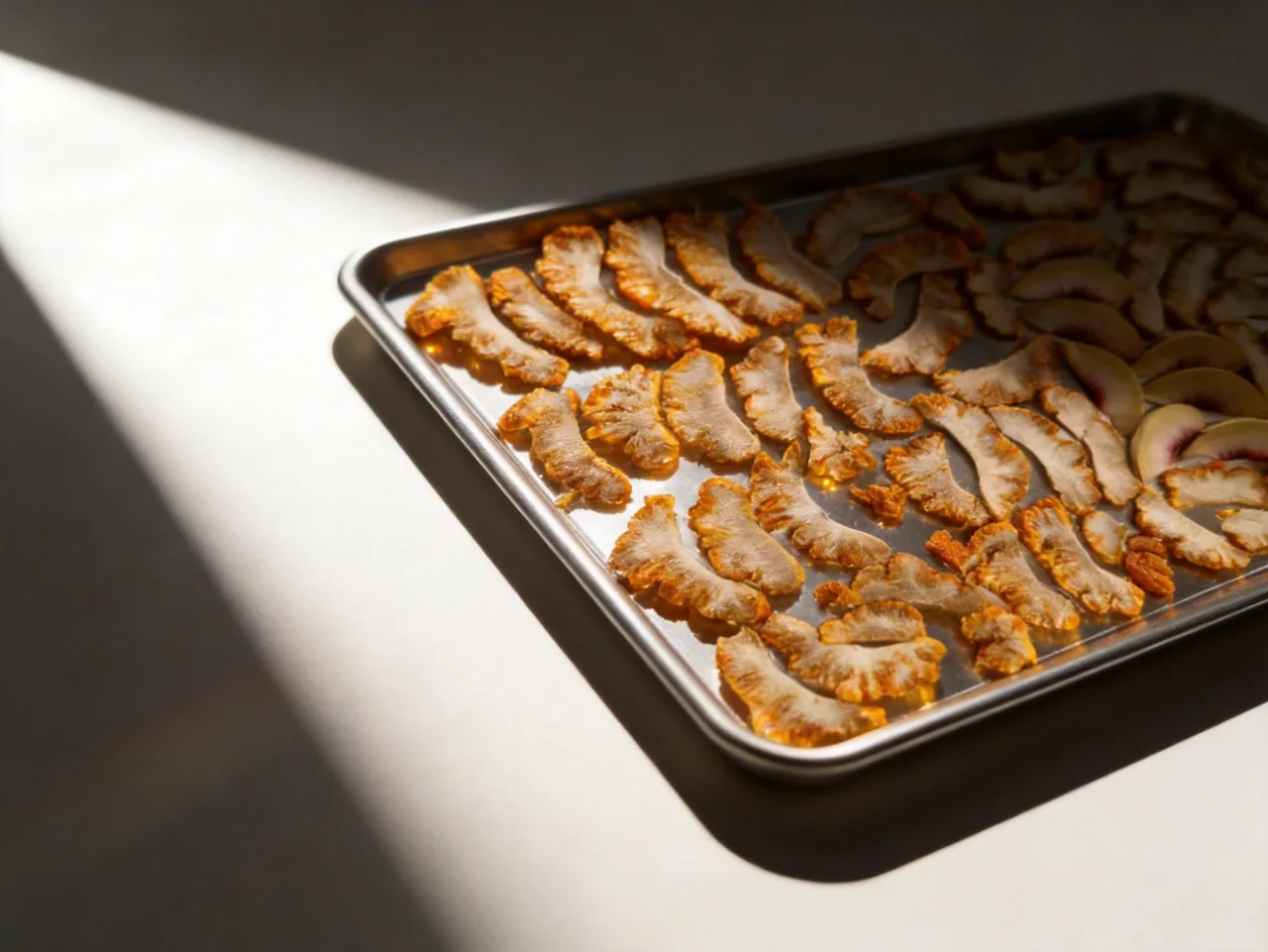
What changes in texture and flavour
Freeze drying changes texture more than flavour. Fresh tropical fruit is soft, wet and heavy; the freeze-dried piece is light, dry and crisp, with the water gone and the structure left behind. It shatters gently on the bite, then melts on the tongue — the crisp, airy bite that sets it apart from chewy dried fruit.
Flavour concentrates as the water leaves, so the fruit tastes more of itself — sweeter, more aromatic, more intense. Because no heat is involved, the fresh, bright notes survive instead of turning cooked or caramelised. Colour holds up well too: the orange of mango, the gold of pineapple and the pink of dragon fruit stay close to the fresh fruit, though very ripe or bruised fruit can still darken.
Where freeze-dried tropical fruit sells
The same batch can serve several markets, so decide which one you are aiming at before you choose your pack size and cut.
- Snack packs: single-fruit or mixed tropical packs, sold as a light, ready-to-eat snack. Mango and pineapple lead; dragon fruit adds colour.
- Cereal and yoghurt topping: smaller pieces sprinkled over breakfast cereal, porridge or yoghurt, where the crunch and colour stand out.
- Baking ingredient: pieces and crumbs folded into muffins, cakes and granola bars, where the fruit adds flavour without adding wetness.
- Powder: fruit ground after drying, for smoothies, drinks and flavouring, where a fine powder blends easily.
Sorting and ripeness
Freeze drying preserves what goes in, so sorting is where quality is decided. Sort out bruised, overripe or damaged fruit before peeling — a bruised piece dries darker and softer, and one bad piece in a pack is what the buyer remembers.
Ripeness is a choice, not an accident. Choose fruit at the ripeness you want in the finished product: ripe enough to be sweet and aromatic, firm enough to slice cleanly and hold its shape. Very ripe fruit dries softer and darker; underripe fruit dries firmer and tarter. Keep one ripeness per batch, and sort by size too.
Seasonal sourcing
Tropical fruit is seasonal, and the harvest window differs by fruit and by growing region. Mango has a main season in each producing country, while pineapple and banana fruit through much of the year in the tropics. Plan your buying around the main harvest in your sourcing region, when fruit is plentiful, ripe and keenly priced.
Because seasons shift from one country to another, many producers source from more than one region, so that when one harvest ends another begins. That takes planning and reliable suppliers. Check with your supplier for the current harvest calendar in their region — seasons move, and last year's calendar is not a promise for this one.
Packaging and storage
Freeze-dried fruit is dry, light and fragile, and it takes up moisture fast. The moment the dryer door opens, the pieces start absorbing water from the air, so move them into sealed packaging promptly and handle them in a dry room.
Pack in sealed bags or pouches that keep moisture out, and handle the finished pieces gently — they are crisp and break easily. Keep packed product cool, away from strong light and damp. Check the rules of your target market before printing claims on the pack, including anything about shelf life or nutrition.
What to check before buying a dryer
Before you buy, be clear about your product and your output. A dryer is sized by how much fresh fruit you load per batch, so start from your fruit supply and your sales plan, not from the machine alone. Run a trial batch of your own fruit first: colour, shape, crispness and breakage are all visible in one tray.
Check the chamber and the trays first. A square stainless chamber with flat trays loads evenly and cleans easily, and tray area decides how much you can load per batch. Then check the controls: a PLC with a touchscreen that repeats the same programme batch after batch is worth more than manual controls.
QS freeze dryer models
| Model | Tray area | Trays | Power | Dimensions (mm) | Batch capacity |
|---|---|---|---|---|---|
| QS-FD-20 | 20.16 sqm | 84 | 35kW | 4500x1300x1400 | ~200kg/batch |
| QS-FD-100 | 103.68 sqm | 432 | 135kW | 7000x4000x2300 | ~1t/batch |
| QS-FD-200 | 207.36 sqm | 864 | 135kW | 12000x4000x2300 | ~2t/batch |
- Chamber: SUS304 stainless steel, square chamber.
- Cold trap: -60°C, R404A/507 refrigerant.
- Heating: ±0.1°C control, max 80°C.
- Control: Siemens S7-200 PLC with touchscreen.
- Vacuum pumps: Roots + screw vacuum pumps.
- Seals: food-grade silicone seals.
- Warranty: 1-year warranty; lead time approx. 3 months.
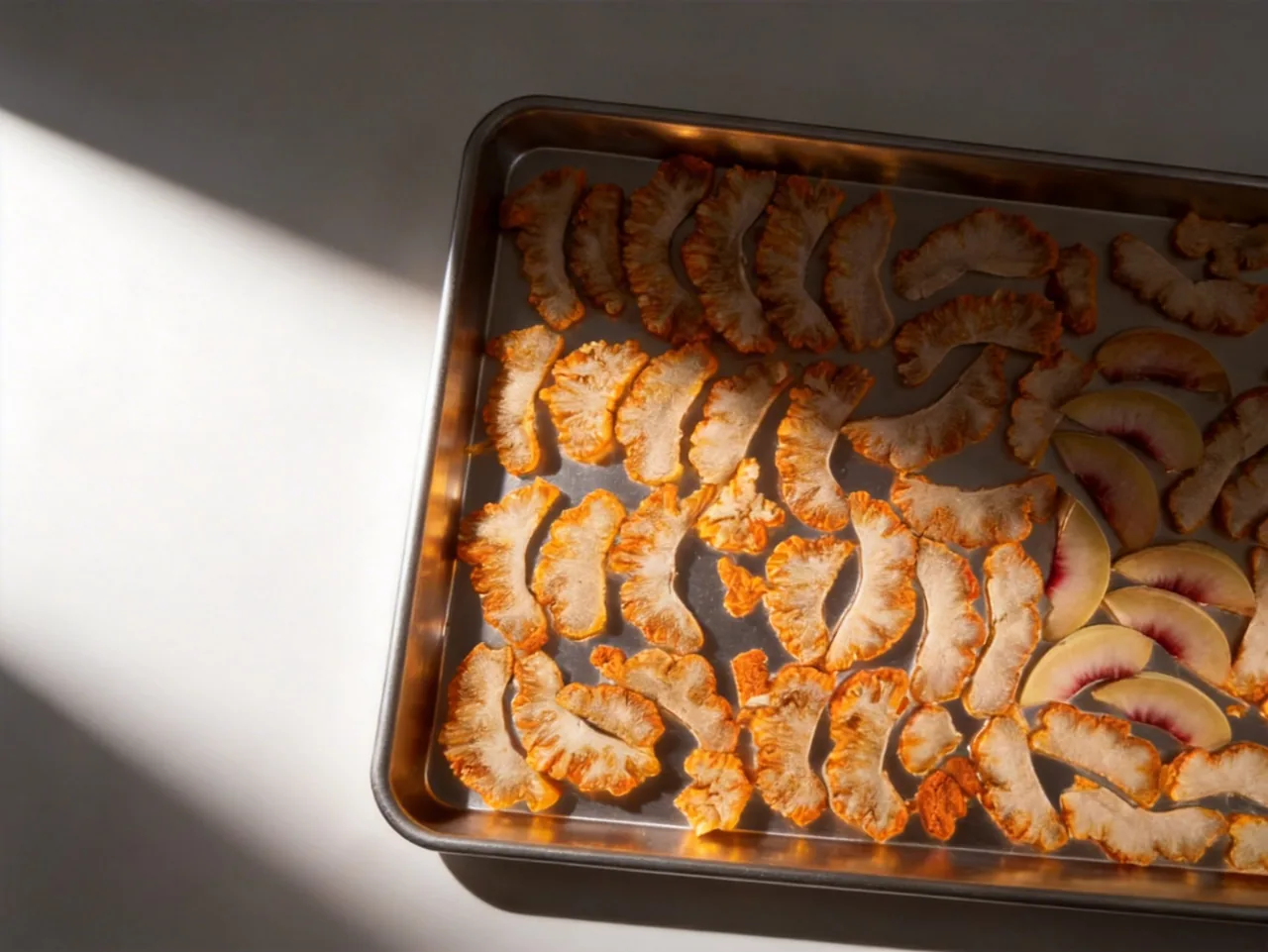
A small producer starting with one fruit can begin with the QS-FD-20 and grow from there. A factory supplying retail chains, or drying several fruits through the year, will need the larger tray area of the QS-FD-100 or QS-FD-200. Either way, size the machine from a trial batch of your own fruit.
Common mistakes to avoid
Most disappointing batches come from the same few oversights.
- Mixing sizes in one batch, so small pieces over-dry while large ones stay damp.
- Loading pieces that touch or overlap, which dry unevenly and stick together.
- Using overripe or bruised fruit, which dries darker and softer than the rest.
- Leaving finished pieces out in the open, so they take up moisture and soften.
- Printing shelf-life or nutrition claims without checking the target market's rules first.
- Sizing the dryer from a catalogue figure alone, without a trial batch.
Frequently asked questions
Which tropical fruit is best for freeze drying?
Mango and pineapple are the usual starting points: widely grown, familiar to buyers, and they hold their shape and colour well after drying. Banana, dragon fruit, papaya and jackfruit all work too, but each has its own preparation step, so start with one or two fruits and add the rest once your first product sells.
Do freeze-dried tropical fruits keep their colour?
Largely yes. Because freeze drying removes water at low temperature, the bright colours of mango, pineapple and dragon fruit hold up far better than in hot-air drying. The result still depends on the fruit and its ripeness, so sort carefully and check a dried sample first.
How should I store freeze-dried tropical fruit?
Keep the pieces dry, sealed and away from moisture and strong light, in a cool place. Freeze-dried fruit takes up moisture quickly once the pack is open, so pack in sealed bags or pouches and handle the pieces in a dry room. Check the rules of your target market before printing any shelf-life claim.
What size freeze dryer do I need for tropical fruit?
It depends on how much fresh fruit you want to load per batch. The QS-FD-20 takes about 200 kg per batch, the QS-FD-100 about 1 tonne, and the QS-FD-200 about 2 tonnes. Run a trial batch of your own fruit first, then size the machine from the result.
Talk to us about your freeze drying line
Tell us your product and target output — we will help you size the dryer. Explore the range on our freeze dryer page.
Specifications are for reference only and are subject to the final supplied equipment.